Vines and Pastures
The Neretto di Salto
The Neretto di Salto (Nèiret ‘d Saut) is an extremely rare native grape variety, originating from the Salto area, from which it takes its name. Once widespread and appreciated, today it is cultivated only in a few specimens recovered after years of research. It is a very vigorous vine, with trilobed or five-lobed leaves, compact clusters, and small berries with thick skins, very rich in anthocyanins. Documents dating back to the late 1800s attest to wines with good alcohol content and excellent quality; currently, there are no data as it is no longer vinified in pure form.
The Cultivation Area
Until the early 20th century, Neretto di Salto was cultivated throughout the area between Salto and Priacco, as well as in neighboring municipalities of upper Canavese. The territory extending from the Casaforte di Torre Pietra through the settlements of Del Deiro and Nava to Salto has always been suitable for viticulture. Today, the splendid terraced vineyards descending from Monte Belice toward the valley among the woods remain as a testimony.
Currently, only a few specimens survive, along with some plants perhaps unknowingly preserved in small family vineyards. Fortunately, the grape variety has been cataloged and safeguarded in the Ampelographic Collection of Grinzane Cavour, an important genetic heritage that preserves rare and endangered grape varieties from Piedmont and other regions.
In 2021, some buds were successfully recovered to reintroduce the Neretto into the lands of Casaforte di Torre Pietra. After more than sixty years, this grape has returned to take root in its original locations. Dino’s grandmother, Mariuccia Bonatto Marchello, recalled stories from her grandmother, Domenica Perono Garoffo, who in the 1960s described the lands surrounding the farmhouse as rich in Neretto vineyards, alternating with orchards, vegetable gardens, and cereal fields, the latter intended for self-consumption. Wine and fruit produced here were brought every Thursday to sell at the large market of Cuorgnè, under the ancient medieval arcades. Some specimens of the grape variety can still be seen in front of you.
The Cuorgnè Sheep
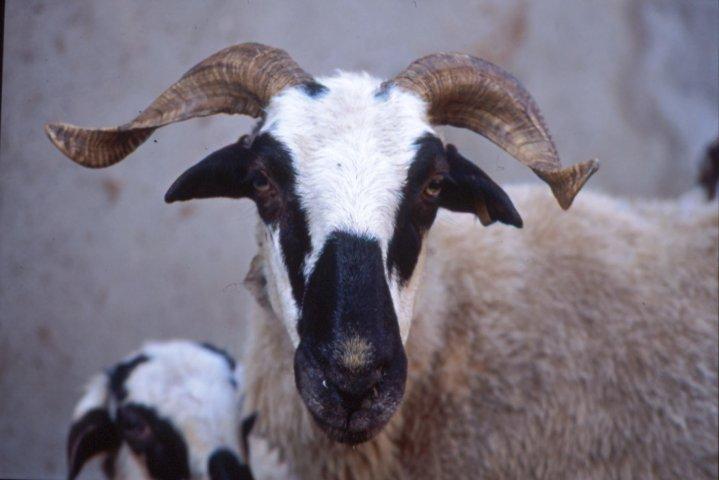
Another peculiarity of the area is the Cuorgnè Sheep, also called Savoiarda, a native sheep breed that is also now endangered. It is a medium-sized animal with triple aptitude: meat, milk, and wool. Easily recognizable by the black markings around the eyes and on the muzzle, the small black-pigmented ears, and the horns present in both sexes—robust and spiral in rams, shorter and flattened in females. This breed was still raised until 1990 in the Salto area by Michele Ronchietto. Today, according to the latest available data, just over two hundred heads survive in all of Piedmont. Despite being included in conservation programs, it remains a highly threatened breed in need of protection.
Bibliography
Notes for a History of Cuorgnè - Mario Bertotti
Walks in the Canavese - Antonino Bertolotti
RARE Association