The Medieval Garden
The medieval garden was a fundamental space, not only for food sustenance but also for spiritual and therapeutic life. It was often organized within monasteries, castles, or around peasant dwellings. Characterized by an enclosed structure surrounded by walls or hedges, known as Hortus Conclusus, it was designed to be a self-sufficient and orderly ecosystem.
As early as the 11th century, Charlemagne issued the Capitulare de villis, one of the most famous administrative documents of the early Middle Ages. Its promulgation provides an extraordinary insight into medieval organizational, economic, and agricultural life.
The document contains a mandatory list of plants that had to be cultivated in royal gardens. This botanical list influenced European agriculture for centuries.
THE HERBULARIUS
Medical and Pharmaceutical Science
In this area, “simple” herbs are cultivated—natural active ingredients used to prepare medicines, ointments, and infusions:
Salvia officinalis, known for its tonic and cleansing properties; its name derives from the Latin salvus (healthy).
Mint, used to freshen breath and soothe the stomach.
Rue, used by scholars to relieve eye strain and for its antiseptic properties.
Lavender and rosemary, essential for personal and environmental hygiene, used to scent fabrics and counteract miasmas.
Wormwood: for digestive issues.
Lily and rose: beyond their symbolic and ornamental value, they were used for soothing oils and infusions.
Textile Plants: flax and hemp, essential for fabrics.
Dye Plants: species such as mallow, dandelion, and St. John’s wort were also used, along with many others, to extract pigments for textiles. Especially: weld (Reseda luteola, for bright yellow), woad (Isatis tinctoria, for blue), and madder (Rubia tinctorum, whose roots yield red). These dye plants were widely cultivated and essential for coloring fabrics and yarns.
St. John’s wort was known as “devil-chaser,” as tradition held that it protected against witches and evil spirits; it was hung at house entrances for protection.
The Hortus
Dedicated to the production of vegetables for food consumption. The medieval diet was based on seasonality and preservation.
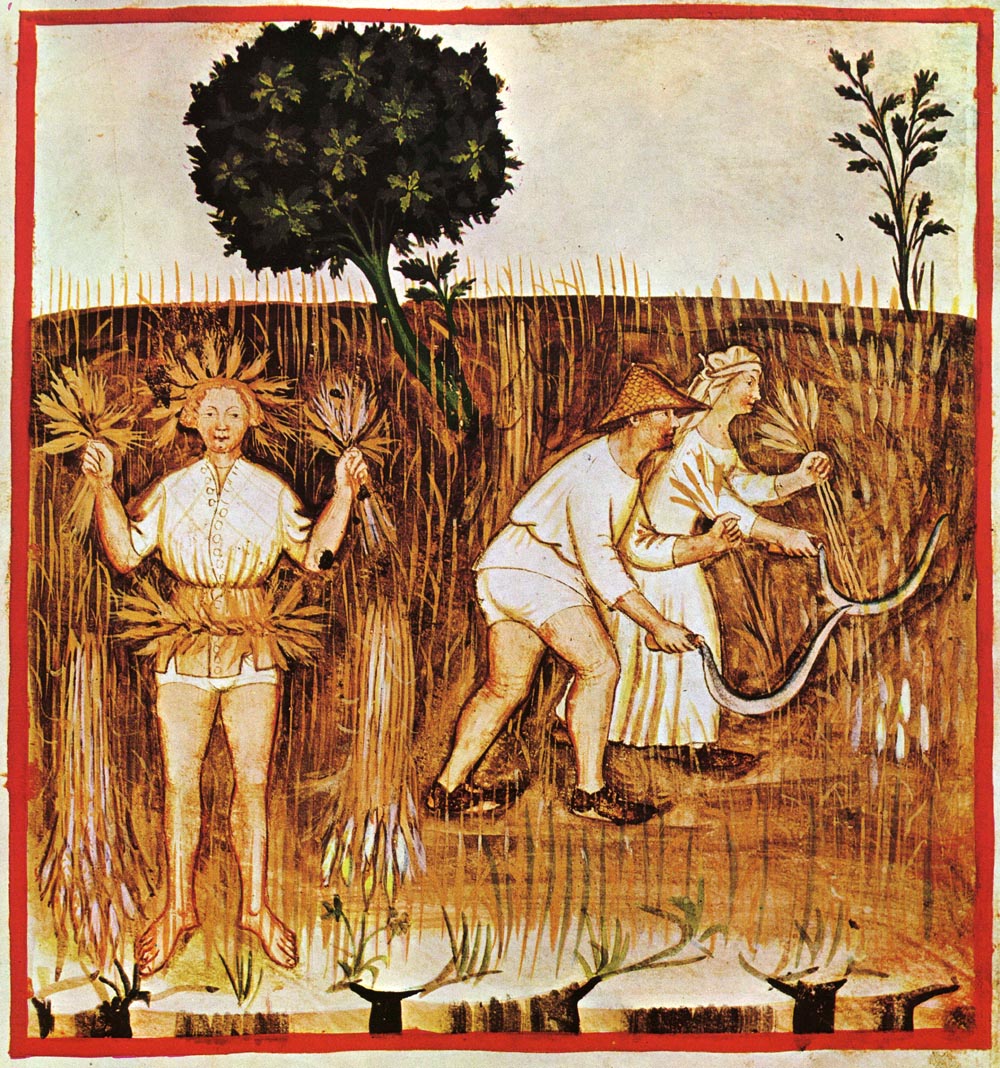
Cereals: barley, rye, oats, and millet were the most common. Wheat was a luxury reserved for the white bread of the nobility. The poor ate dark bread (a mixture of rye and wheat) and a lot of millet polenta, spelt, rye, barley, or chestnut flour—never corn, which arrived in Europe only after the discovery of America—and cereal soups.
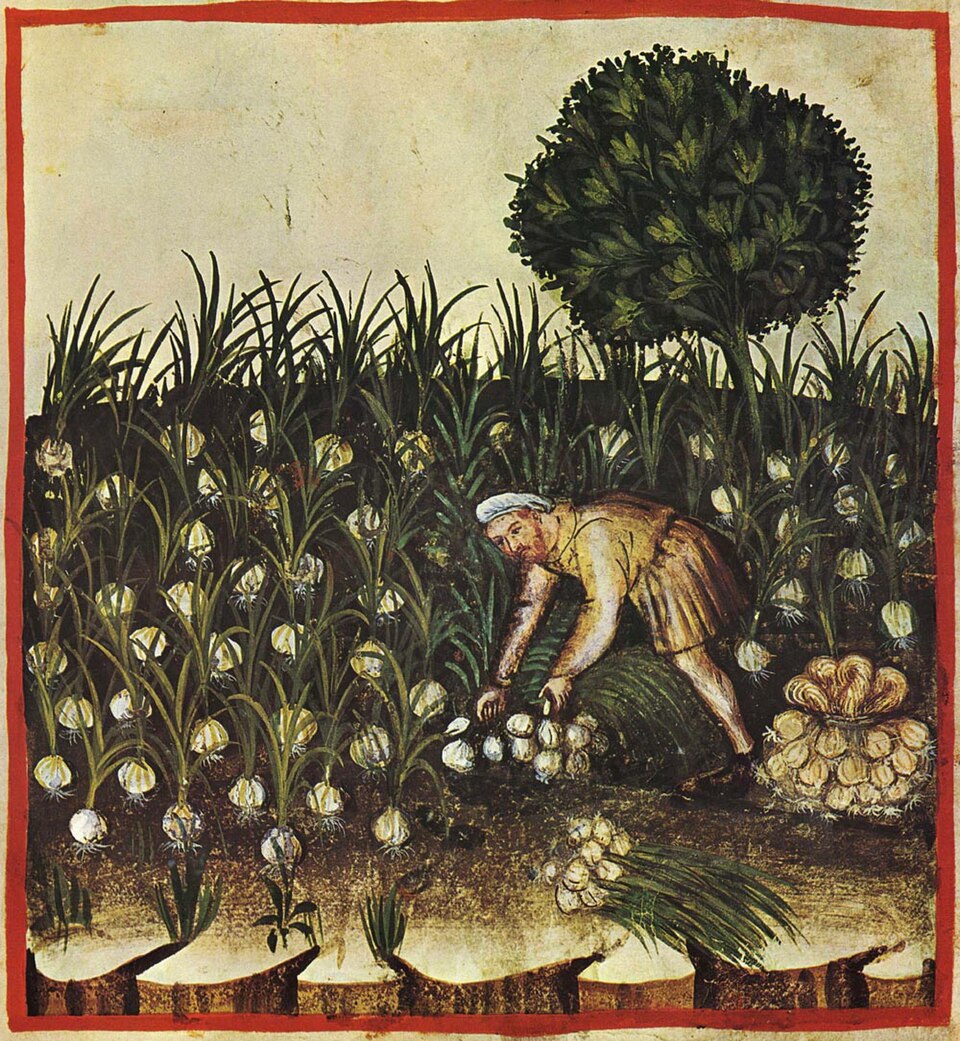
Leeks, garlic, and onions, hardy and easy to preserve, formed the aromatic base of every meal, along with cabbages, chard, spinach, and sorrel. Cabbage, in particular, was the quintessential survival vegetable during winter.
Since salt was expensive, many herbs such as thyme, marjoram, oregano, and parsley were used to flavor food.
Legumes such as broad beans, beans, chickpeas, grass peas, and lentils were the main source of plant protein.
The beans we know today (such as borlotti and cannellini) did not exist in Europe; they arrived from America after 1492. In the Middle Ages, the black-eyed pea was cultivated and consumed.
Root vegetables such as turnips and parsnips were grown as a source of carbohydrates (in the absence of modern potatoes).
All the species present here are native or were introduced from the East in ancient times. Species imported from the Americas, such as tomatoes, potatoes, and peppers, are not present.
In the two raised beds, you can find some examples of the plants mentioned above.