Fortified Houses and Feudal Lords in Canavese
Fortified houses represented one of the strategic points for controlling the territory and agricultural lands. For the Lords who built them, their function was not purely defensive: these structures were symbols of prestige, characterized by an evident architectural monumentality in their portals and windows, in stark contrast to the modest peasant huts. Architecturally similar to castles, they provided passive defense through robust masonry, few openings located on upper floors, and elevated entrances. Inside resided the Dominus loci with his milites, responsible for collecting tributes and protecting his subjects in case of attack.
Political Instability and Historical Falsifications
The spread of fortified houses was a direct response to instability between the 10th and 16th centuries. In the absence of a central authority, security became precarious, forcing the lesser nobility to independently provide for the defense of their jurisdictions. Reconstructing this scenario, however, is complex: the region suffers from a chronic lack of documents, often replaced by historical manipulations.
A significant example is that of the Counts of Valperga, accused of fabricating false family ties and investitures to legitimize their rule. According to some historians, the Valperga systematically destroyed documentary evidence of previous lords, replacing it with skillfully forged archives to justify their dominion over Canavese.
Local Dynasties and the Lords of Torre Pietra
Among the historical families, the Silvesco stand out, nobles from Salto (from the Latin Saltus, forest), linked to the Torre Rotonda of Cuorgnè and founders of the original core of the Castle of Valperga. Around them gravitated minor vassals such as the Grossi (owners of the Torre della Dogana, destroyed in 1360), the Ajra (who already possessed a fortified house in Salto), and the Dejro and others.
Regarding the fortified house of Torre Pietra, the medieval documentary gap is almost total. Only in the 18th century does the Savoyard Cadastre record the Petra family as owners of the tower and courtyard. It is plausible that the Petra were the original lords of the site, following the medieval custom of linking surnames to place names, or vassals of the Silvesco entrusted with guarding the area. Today, these structures remain rare testimonies of a once widespread defensive system, often reused as building materials in later centuries.
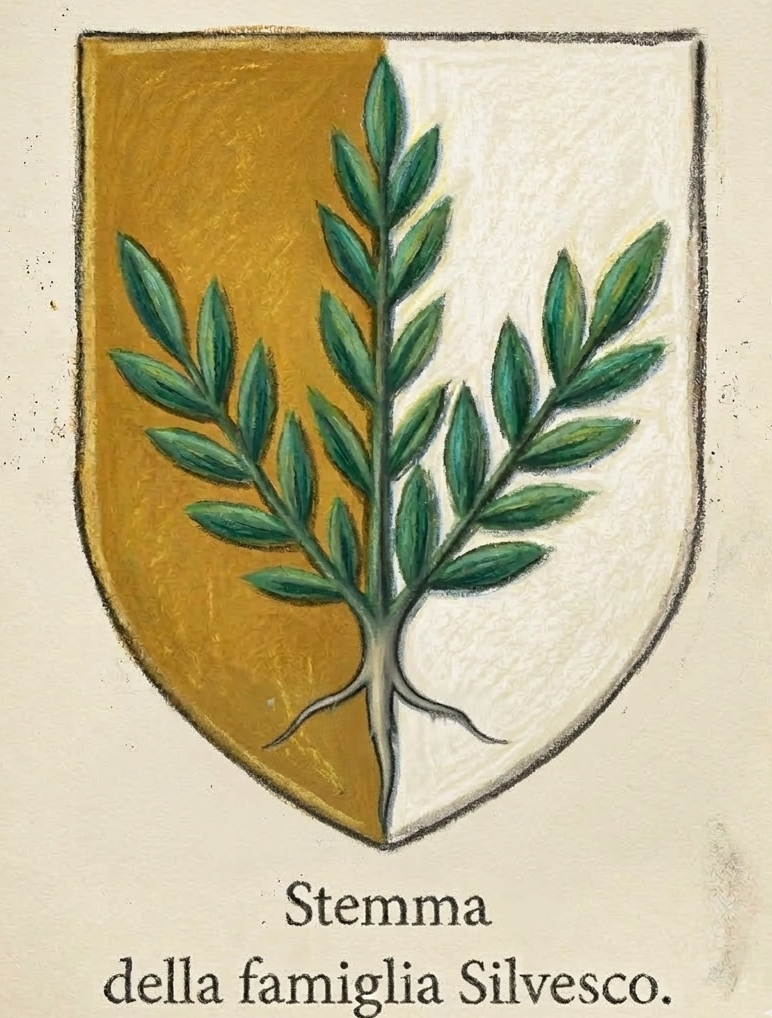
Silvesco Coat of Arms
Motto: “RESPICE FINEM” — translated as “Consider the end”
Shield divided vertically in gold and silver, with a green tripartite plant showing exposed roots.
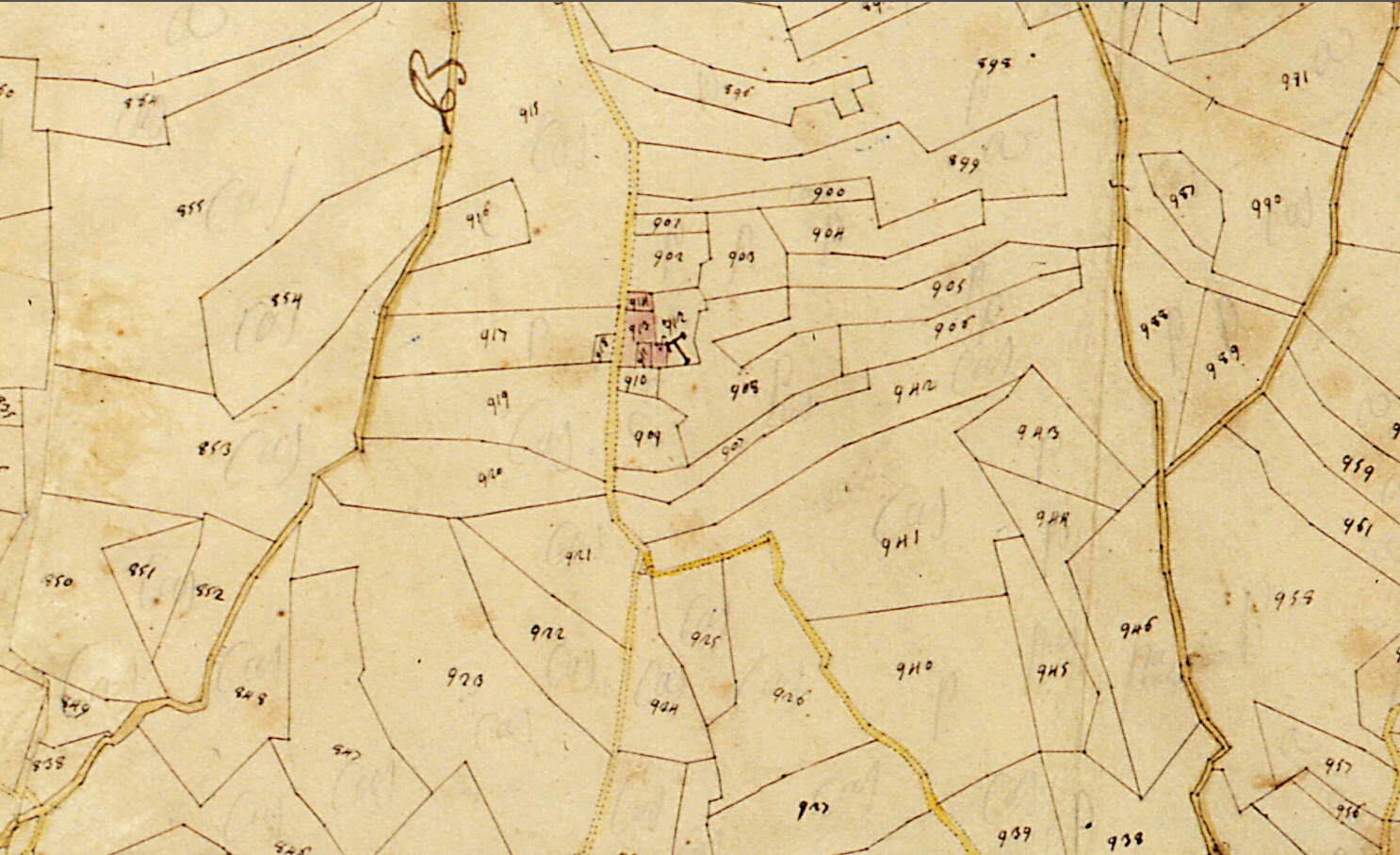
Excerpt from the map of Salto – Savoy Cadastre – District of Cuorgnè – Salto (dating to around 1700).
In particular, the hamlet of Pietra can be observed, which had its buildings (red-colored rectangles) arranged in an L-shape, unlike today.
The tower is the first small square next to the letter “T”.
Bibliography
Caseforti Montane nell’alto Canavese. Quale futuro? Micaela Viglino Davico
Appunti per una storia di Cuorgnè - Mario Bertolotti
Il “Castello” di Pertica - Angelo Paviolo
La Pianticella di Canapa - Luigi Bertotti
Passeggiate nel Canavese - Antonino Bertolotti
Archivio di Stato di Torino
Omaggio a Don Perotti - Realizzato dagli amici di Don Attilio